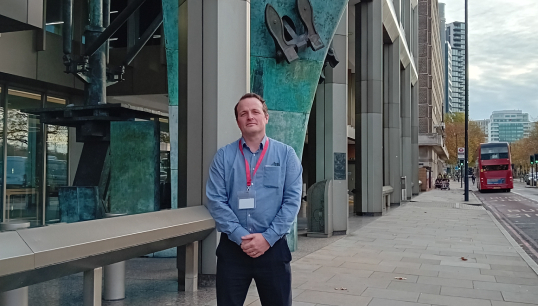
At the latest Nautilus Professional and Technical Forum on 3 February, we invited members to contribute to the Union’s position on the ongoing review of STCW – with concrete proposals for amendments soon to be considered at the International Maritime Organization (IMO).
The current review process marks the third major revision since the convention was first adopted in 1978. Previous revisions in 1995 and 2010 introduced important changes to the convention, including the introduction of minimum hours of work and rest, requirements for administrations to provide detailed information on implementation to the IMO, and additional training requirements such as leadership and management training, refresher training, ECDIS and High Voltage.
The latest updates are being progressed through the IMO Sub-Committee on Human Element, Training and Watchkeeping (HTW), which is meeting for its 12th session on 23–27 February 2026. A meeting of the intersessional working group related to HTW is also taking place on 2-6 March 2026. Nautilus is participating as part of the International Federation of Shipmasters’ Associations (IFSMA) delegation, and we have also contributed to proposals submitted by the UK as a member state.
To ensure our contribution reflects members’ experience, the Forum focused on several of the key issues under discussion. The points below summarise the views expressed.
Simulators
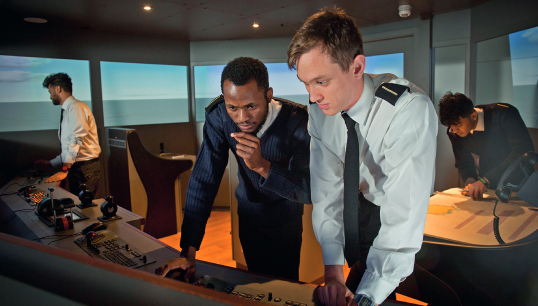
The potential for simulators to replace a proportion of mandatory sea time has been debated at previous Forums, with UK members generally cautious about the concept. By contrast, in the Netherlands, simulator time has long been recognised within training pathways.
On this occasion, there was a broad view that a limited and carefully defined allowance for simulator time could be acceptable, provided it is delivered using full-mission bridge simulators.
Members stressed that simulator use should add genuine training value, particularly by exposing trainees to scenarios they are unlikely to encounter during routine sea service. There was strong support for such scenarios being clearly specified within STCW. We confirmed that the UK delegation intends to present proposals to HTW setting out the types of training that should be included.
Bullying and harassment
There was clear agreement that training on bullying and harassment should form part of STCW standards, but a balance would need to be struck to ensure that seafarers were not overloaded with additional training requirements. Some members highlighted poor experiences with superficial computer-based modules which can be more a tick-box exercise than of any practical use.
In terms of responsibility, the preference was for employers to provide such training rather than maritime authorities. That said, members noted the varied employment structures within sectors such as yachting and the reality of poor practice among some operators.
Master <500gt Unlimited
Under the current framework, seafarers can qualify as a Master on vessels under 500gt via a shorter route, with the certificate limited to near-coastal operations.
Proposals before HTW would introduce a new Master <500gt Unlimited certificate, permitting service beyond near-coastal waters. The key question is how any upgrade pathway should be structured. Members at the Forum felt that it was questionable whether there is a lower risk profile for a smaller vessel operating in the unlimited area that would justify a lower level of certification.
I would like to thank all members who contributed to the discussion. Their insight is essential in shaping Nautilus’s engagement at HTW12 and in the intersessional work that will follow.
Tags