
From London's waterways to wartime secrets: an inland skipper with journalism in his wake
11 June 2026
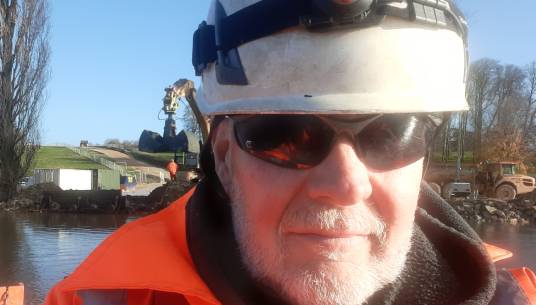
Nautilus International member Rory MacLean has built a career few could match – from investigative journalism and a landmark maritime safety campaign to working as an inland waterways skipper and uncovering the hidden life of a World War Two German spy. Interview by Deborah McPherson
For around 15 years, Mr MacLean has worked as a skipper on London's inland waterways, operating pusher tugs and crane barges on a wide range of commercial projects.
He began his maritime career transporting passengers along the canal between Paddington and Camden before moving into construction and infrastructure work, a lesser-known but vital part of the sector.
From dredging silted waterways to laying cables and supporting engineering works, much of his work takes place behind the scenes and often in areas only accessible by water. Recent projects have included preparing river pylons on the River Lea for major electricity upgrades.
Despite its importance, Mr MacLean says inland waterwaywork remains overlooked.
'It's a very small sector and not a lot of people know about it,' he explains. ‘People tend to think it’s all leisure or houseboats, but there is still a small and significant market for commercial work.'
Increasing congestion from residential and leisure vessels has made that work more complex.
'It is also causing significant issues in terms of commercial operations. If you take 90 feet of barge and push a tug through the centre of London, manoeuvring has become increasingly difficult and that's a genuine issue facing skippers every day of the week now, because the leisure sector and the residential sector have grown so greatly that actually safely moving a boat from A to B has become more difficult,' he adds.
Reporting roots and maritime safety
Before taking to the waterways full time, Mr MacLean worked as a journalist – a background that led him into one of the most significant maritime safety campaigns of recent decades.
His reporting on the high number of unexplained bulk carrier losses at the time brought him to the case of the MV Derbyshire, which sank in 1980 with the loss of all hands.
Working alongside Nautilus and the International Transport Workers' Federation (ITF), Mr MacLean helped highlight concerns around aging ships, poor maintenance and crew safety. He later joined the underwater survey expedition in the South China sea, led by former Nautilus general secretary Mark Dickinson, that located the wreck 2 miles under on the seabed of the South China Sea.
'We were all in the control room when the SUV found it, while looking for the sonar which had dropped off a towing cable. It was one of the most amazing moments of my career,' he says.
The campaign – driven by unions, journalists and the families of those lost – eventually led to a formal investigation and significant improvements in international maritime safety standards.
'That campaign was really important and still has relevance because the trouble for mariners in general – and you can see it with the crew who are currently trapped in of the Straits of Hormuz now – is they're out of sight and generally out of mind. Anything that improves conditions for crews is a good thing,' Mr MacLean reflects.
As to the value of staying in the Union, Mr MacLean says: 'As a self-employed skipper often working alone, it gives me the support of knowing that Nautilius has my back.'
From deckhand to skipper
His move into maritime work was gradual. While still working as a journalist, he spent time as a deckhand – paid, he recalls, 'in beer' – before deciding to pursue it professionally.
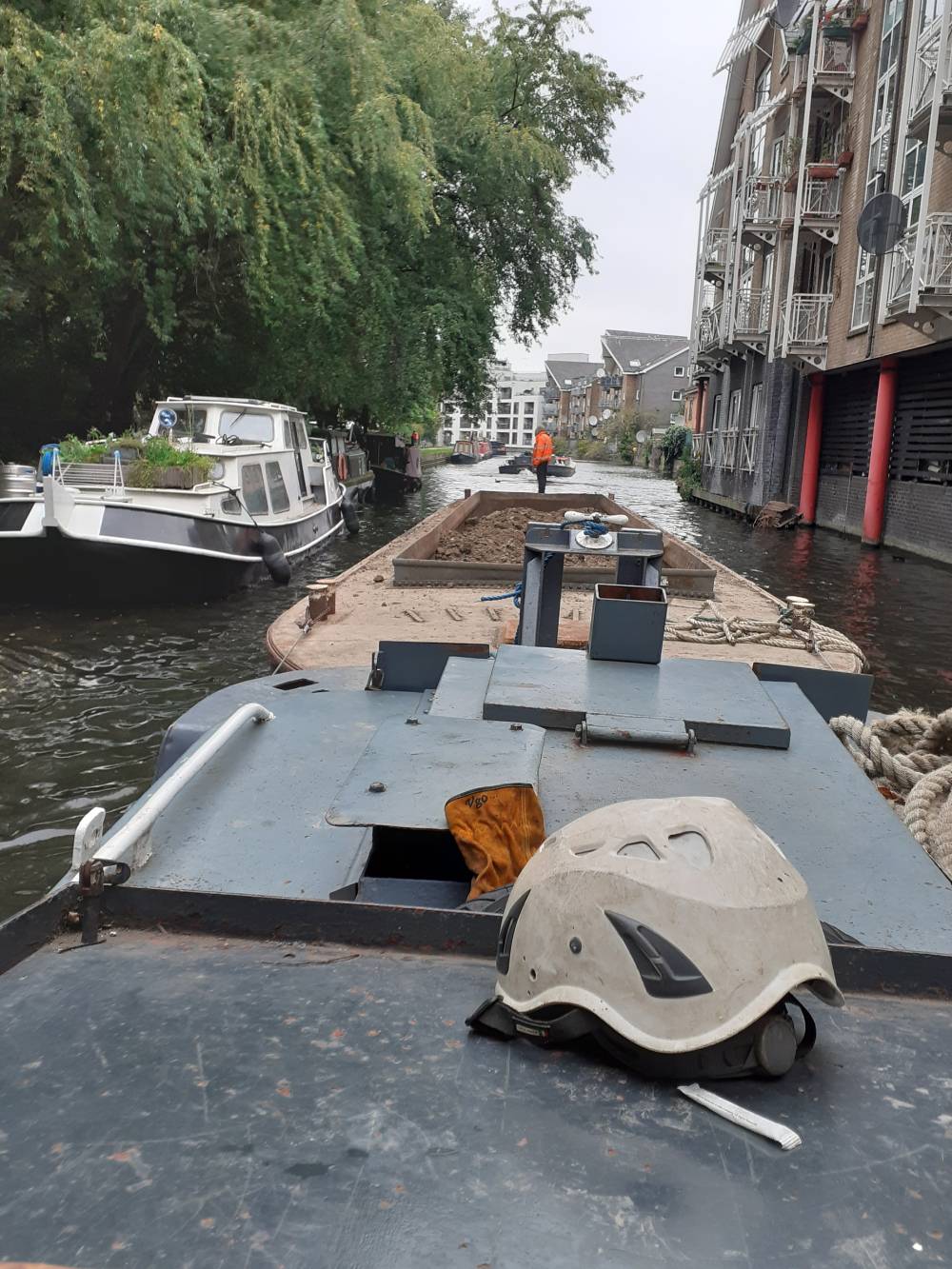
He gained a boatmaster’s licence restricted for inland waterways along with a range of additional qualifications, including hydraulic crane operation, a key skill in his line of work, as well as firefighting and boat manoeuvring. He is also qualified in first aid and has a commercial powerboat certificate.
The rules may be slightly different from deep sea but the responsibility as captain is the same: 'You are the master of that boat,' says Mr McLean. 'Anything that happens is your responsibility.'
His has no desire to return to journalism but his nose for a story remains intact: 'I've maintained a particular interest in history, which is why I've always enjoyed working on the canals because a lot of them are 200-year-old structures. And so, when you're involved in rebuilding a bit of one, you're actually part of that history, which is a nice element of the job.'
A wartime story uncovered
More recently, Mr MacLean has returned to both his love of history and his investigative roots as an author, spending six years researching and writing a book about Gisela Klein, a German spy active before and during the Second World War.

The story began with a chance discovery from some records released by the National Archives, while looking into the Profumo affair of the 1960s. Klein had once been connected to Jack Profumo decades earlier – a link that prompted deeper investigation.
What emerged was a remarkable portrait of a woman who moved in elite circles and had access to influential figures at a critical moment in European history.
'Her connections were astonishing, she knew everybody,' Mr MacLean says.
Despite this, her story remained largely hidden.
'Because she was a woman and a model, people didn't take her seriously. She was hidden by her own design, but also largely hidden by the men who were around her who didn't give her full status, I think.'
With support from Ms Klein's family in the United States, Mr MacLean was able to piece together a narrative that sheds new light on intelligence and society in the pre-war period.
A career shaped by curiosity
Mr MacLean sees a clear thread running through his varied career – a genuine interest in the world and the stories within it.
A strong maritime thread runs through his life with a father who sailed on four-masted barques, one called the Viking, and another, the Archibald Russell, and they were the 'last gasp of sail' doing the grain run to Australia. His father died when he was very young, but he thinks he would have approved of Mr MacLean's career change.
'I've been incredibly lucky,' he says. 'I've been able to do things I really enjoy.'
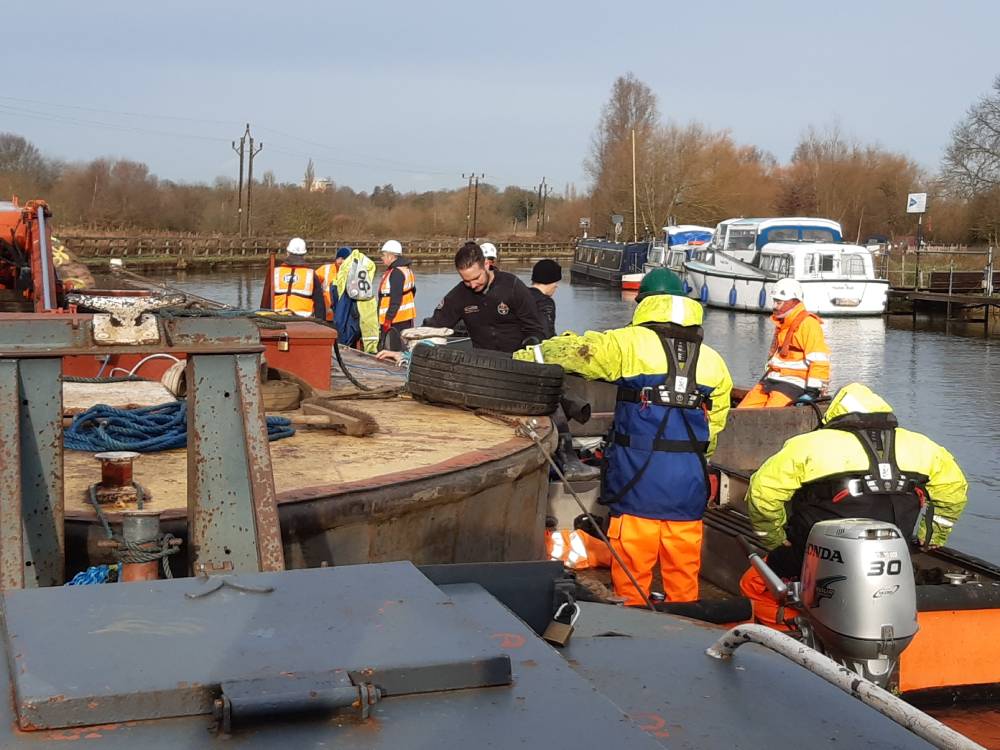
Even now, he continues to work on London's waterways, having played a role in major projects such as preparations for the 2012 Olympics. His work included both safety boat operations and the movement of materials across the Olympic site. His story highlights the diverse sectors Nautilus members work in – and how maritime careers can take unexpected and fascinating turns.
Tags