The long-running ITF's Flag of Convenience campaign exposes and seeks to regulate ships registered under lax foreign flags to protect seafarers' rights, ensure safety, and promote fair, properly regulated maritime work
The International Transport Workers' Federation (ITF) has long campaigned against the use of so-called flags of convenience (FOCs) – a practice in which shipowners register vessels in foreign countries with lax regulations, low taxes, and minimal labour standards. The ITF's Flag of Convenience Campaign is a global effort to protect seafarers from exploitation and ensure that maritime work remains safe, fair, and properly regulated.
FOC vessels are often registered in countries with weak labour laws, allowing shipowners to cut costs by paying lower wages, skirting safety regulations, and employing crews on insecure or short-term contracts. While this may reduce operating expenses, it creates serious risks for seafarers, including unsafe working conditions, lack of proper insurance, and limited recourse if rights are violated.
How the ITF helps
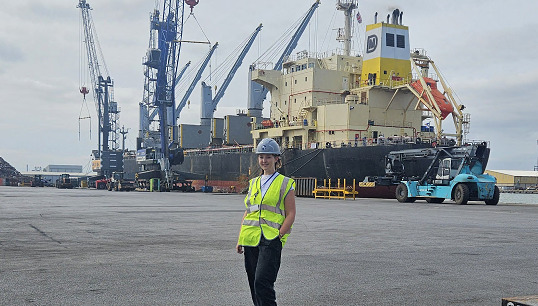
Through its campaign, the ITF works to identify FOC ships and secure justice for workers aboard them through the work of its dedicated ITF inspectors – several of whom are co-employed by Nautilus International in the UK.
Inspectors in ports worldwide check vessels for compliance with international labour standards, including the Maritime Labour Convention, and support crews facing harassment, unsafe conditions, or contractual violations. The ITF also pushes governments and international bodies to strengthen maritime regulations and enforce responsible shipping practices.
Nautilus ITF inspectors recover US$1.2 million for seafarers
Over the past year, ITF inspectors seconded from Nautilus International to the ITF have helped recover almost $1.2 million in unpaid wages and overtime for seafarers. This comes from their everyday work visiting ships in ports across their patches, which include Scotland, north west England, north Wales, south Wales and south west England, as well as clawbacks they have achieved by stepping in to support abandoned crews in ports around the world where no ITF inspector is currently based.
Get in touch with an ITF inspector
If you are working onboard an FOC vessel you can find your closest inspector by visiting the ITF Seafarers website at itfseafarers.org, looking up their details in the ITF Seafarers’ Bulletin magazine, or downloading the ITF Seafarers app from the Google Play or Apple store.
Nautilus International members should get in touch with their union representative first. If you are part of Nautilus, speak to your industrial organiser or, in an emergency, contact Nautilus 24/7.
Three new countries added to FOC list
In November 2025, the ITF added Dominica, Gambia, and Niue to the FOC list, bringing it to a total of 48 FOC flags.
- Gambia went from having zero tankers in 2023 to more than 35 by early 2025. The registry is strongly associated with the ‘dark fleet’. Research showed that 99% of its tankers were under sanctions or believed to be carrying sanctioned commodities, although Gambia now claims to be vetting the registry.
- Niue’s registry opened in 2012, but as of 2025 ITF data shows that where ownership of its 59 vessels can be confirmed it is spread across Asian states including Singapore (16), Malaysia (2), Japan (2), Indonesia (7), India (1), Hong Kong (1) and Thailand (1), in addition to the Netherlands (1)
- Dominica: of the registry’s 43 ships, 30 have ownership in the UAE (7), India (7), Kazakhstan (3), Saudi Arabia (2), USA (2), Barbados (2) and Norway (2), in addition to Australia (1), Cyprus (1), Finland (1), Great Britain (1) and Guinea-Conakry (1).
Tags