This FAQ (updated 9 March 2026) reflects the current security environment following Operation Epic Fury (United States) and Operation Roaring Lion (Israel), and subsequent Iranian retaliatory strikes affecting the wider Middle East, including Bahrain, Iraq, Jordan, Kuwait, Oman, Qatar, Saudi Arabia, Syria, the United Arab Emirates, and NATO-linked regional assets.
It is intended to provide members with background and context of international maritime law, trade union guidance, and official maritime security advisories. Members who require direct advice and assistance should get in touch with their industrial organiser.
FAQ for members affected by the current conflict in the Middle East
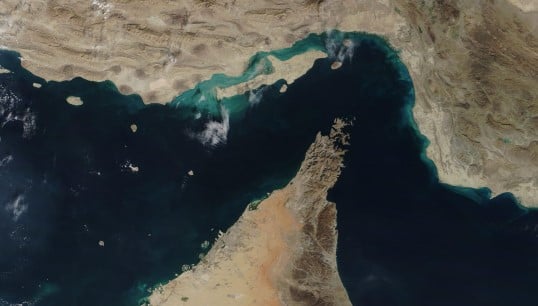
Are seafarers currently operating in a conflict or warlike environment in the Middle East?The Strait of Hormuz and surrounding waters has been designated as a Warlike Operations Area by the International Bargaining Forum (IBF) and the UK Warlike Operations Area Committee (WOAC). This means that if you are working on a vessel trading in, or being asked to transit, the Strait of Hormuz or surrounding waters:
The security situation in the region is rapidly evolving. The ITF and JNG have confirmed that conditions are under continuous review. Seafarers are civilian workers and must not be exposed to military risk or placed in danger as a result of geopolitical conflict. In addition, the IBF has demarcating the area extending 12 miles off the coast of Israel in the eastern Mediterranean, including ports and anchorage areas as an Extended Risk Zone. This means that seafarers are entitled to additional protections, including a bonus equal to their basic wage payable if their vessel is attacked and doubled compensation for death or disability.
What practical protections exist while ships are operating in the region, following the designation of the Strait of Hormuz as a Warlike Operations Area?Seafarers should expect:
Nautilus members should:
Do seafarers have the right to refuse to sail into Warlike areas?Yes, when they are declared Warlike or High Risk. Under the International Labour Organization Maritime Labour Convention, 2006 (MLC), seafarers have an unqualified right to repatriation if a vessel is bound for a 'war zone to which the seafarer does not consent'. What if my vessel is already in the conflict or Warlike zone?The right to safety and repatriation does not disappear once a vessel has entered a designated area. Where hostilities escalate, routes change, or new military activity emerges:
Being 'already onboard' or 'already in the region' does not negate MLC protections. Consent must be ongoing and informed, not assumed. What are my rights if I refuse to continue sailing in a Warlike area?If a refusal is based on genuine safety concerns linked to conflict or war risk:
These principles are reinforced by Union guidance and the MLC; however, the designation of a Warlike Operations Area or High Risk area requires these rights to be assured. Are seafarers entitled to additional pay if they do sail?Often, yes. Where vessels enter areas designated as High Risk or Warlike under collective bargaining agreements:
These entitlements depend on the applicable collective bargaining agreement (CBA), which may refer to a national agreement between unions and shipowners, or one agreed internationally, depending on the terms of the specific CBA. Nautilus will always prioritise seafarer safety and choice over financial considerations when entering negotiations with shipowners regarding Warlike or High Risk areas. Following pressure from Nautilus International's branch in the Netherlands, Dutch shipowners have agreed to give seafarers in the Gulf hazard pay of double their usual salary, as agreed in the collective bargaining agreements the Union has with the shipowners. What information must shipowners provide to crews before and during operations in the region?Shipowners and masters must ensure seafarers are fully and promptly informed of:
Failure to provide accurate and updated risk information may itself breach MLC obligations. How do airspace closures affect seafarers’ repatriation rights?Widespread or sudden airspace closures across the Middle East have a direct impact on crew changes and repatriation. Importantly, airspace restrictions do not suspend the right to repatriation. If immediate repatriation is not possible, or is disrupted due to flight cancellations, flight bans or airport closures, shipowners must:
Extended confinement onboard due to airspace closures may raise fatigue, mental health and welfare concerns, which shipowners are obliged to address. Seafarers should not be pressured to remain onboard indefinitely because air travel is difficult or costly. Repatriation rights remain active until seafarers reach their final agreed repatriation destination. What rights do seafarers have regarding crew welfare during conflict?Armed conflict and heightened security risk place exceptional physical and psychological strain on seafarers. Shipowners' welfare obligations increase rather than diminish in such circumstances. Under the MLC and related guidance, seafarers are entitled to:
Crew welfare must not be subordinated to commercial pressures. Failure to address fatigue, stress, or welfare concerns may itself constitute a breach of safety and labour obligations. What practical protections exist while ships are operating in the region?Seafarers should expect:
What if a vessel is attacked, damaged, or detained?International humanitarian law applicable at sea requires parties to armed conflict to protect civilians, including seafarers, and to respect neutral shipping. Seafarers retain rights to:
What support can seafarers seek if their rights are not respected?Seafarers may:
Serious or repeated breaches may result in detention of the vessel by port state control. What is the core principle seafarers should remember right now?As Nautilus International has stated, seafarers are not expendable. They must not be treated as collateral damage in geopolitical conflict. Safety, informed consent, ongoing consent, crew welfare, and the right to repatriation are fundamental and legally protected, even amid intense regional military escalation. |
Tags
More articles
Advice to UK shipowners operating in the Persian Gulf following 'Warlike' designation
The UK Warlike Operations Area Committee (WOAC) has formally designated the Persian Gulf (PG), Straits of Hormuz (SoH) and Gulf of Oman (GOO) as a warlike area.
UK designates Strait of Hormuz a warlike area
The UK Warlike Operations Area Committee (WOAC) has formally designated the Persian Gulf (PG), Straits of Hormuz (SoH) and Gulf of Oman (GOO) as a warlike area.
IBF designates Strait of Hormuz a Warlike area
The designation follows a sharp deterioration in the security situation in the region, including confirmed attacks on commercial vessels and increasing instability affecting international shipping routes.
Nautilus International calls for seafarer protections as Middle East conflict disrupts key shipping routes
Nautilus International is gravely concerned by the rapid deterioration in security across key maritime routes in the Middle East, including the Strait of Hormuz, because of escalating military conflict in the region.