Yes, it can be dry, and yes, it can be bureaucratic, but it matters. We are closely involved in the latest overhaul of STCW seafarer training standards, and there's a lot that members should be aware of, writes Sarah Robinson
As new technology is introduced and societal attitudes change, seafarer training can't stand still.
But, as with so many things in the global shipping industry, it's a massive project to agree international standards for maritime education – one that takes years of discussion at the International Maritime Organization (IMO).
The good news for members is that can take their views straight to the decision-makers at the IMO, which is the only United Nations agency based in London. Whenever training standards are reviewed, there are delegations to the IMO from flag states such as the UK and Netherlands, but also representatives of non-governmental organisations (NGOs).
That's where we come in: we speak as part of the International Federation of Shipmasters' Associations (IFSMA) or the International Transport Workers' Federation (ITF). Nautilus head of professional and technical David Appleton was the voice of the Union at the IMO meetings in February and March, and he has now reported back on the issues members most wanted to hear about.
How does the review of training standards work?
All seafarers around the world must hold certain certificates to work at sea, and that means passing qualifications that adhere to the IMO Standards of Training, Certification and Watchkeeping (STCW) Convention and Code. Adopted by the IMO in 1978, STCW has been periodically reviewed and amended, and at present there is a major review underway which is expected to conclude in 2029 or 2030.
'The review falls under the IMO Human Element, Training and Watchkeeping Subcommittee (HTW),' Mr Appleton explains. 'Interested parties submit amendments, which are then discussed, accepted, or rejected. But this isn't a typical amendment cycle – it's a full-scale review of the entire convention.'
Before formal proposals were considered, the process began with identifying gaps. Stakeholders assessed where the current STCW framework falls short, whether due to outdated provisions or emerging industry needs. That gap analysis now underpins the current phase, where specific proposals aim to close those gaps and modernise the STCW Convention and Code.
Keeping seafarers employed and safe as new fuels arrive
In his opening remarks at February's HTW meetings, IMO secretary-general Arsenio Dominguez emphasised the need to prepare seafarers for working with new maritime fuels such as hydrogen and ammonia. These developments are central to decarbonisation efforts, but they also introduce new safety challenges.
For us, this is about fighting for seafarers' rights to a 'Just Transition' – the principle that no one should be put in harm's way or find themselves out of a job as the industry moves away from traditional fossil fuels.
The secretary-general was right to highlight the need for new training standards, says Mr Appleton, but unfortunately those were never going to emerge from this session of HTW.
'You can't define training standards until you fully understand the risks, and the IMO is still in the process of conducting a comprehensive safety analysis of these fuels. The findings will inform guidelines on risk mitigation, which will in turn shape future training requirements.'
In the meantime, interim guidance is in place to bridge the gap, and the development of long-term, standardised training for alternative fuels will come later in the review process.
'Nothing is agreed until everything's agreed,' Mr Appleton notes, 'so everything that comes out of this year’s discussions will feed into the ongoing STCW review that will culminate in one major set of changes in 2029 or 2030.'
The STCW change to simulator use shouldn't be about cutting sea time – it should be about increasing competence Nautilus head of professional and technical David Appleton
Should simulators be used instead of sea time?
This is a highly contentious topic that has often been raised by Union members at the Nautilus Professional and Technical Forum. Advances in simulation technology have opened up new possibilities for learning, prompting debate over whether simulator time can partially replace mandatory sea service for trainees.
Mr Appleton is clear about the principle that should guide this discussion. 'It shouldn't be about cutting sea time – it should be about increasing competence,' he argues.
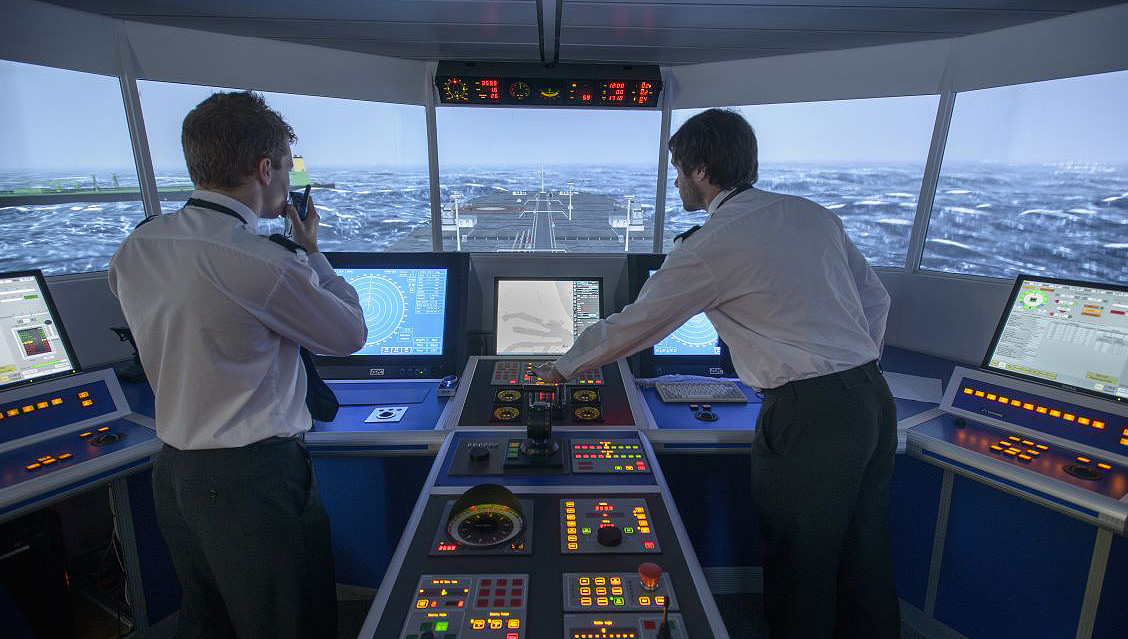
In other words, simulators could provide an experience that trainees may not get in a routine sea phase, such as exposure to handling a vessel in extreme weather conditions. But the technology should not be used as 'sea time' simply because it can be hard to find training berths for cadets onboard ships.
The focus must first be on defining what high-quality simulator training looks like. Only then can regulators assess whether it justifies any reduction in time spent at sea.
The UK national delegation put forward a proposal to the STCW review that reflects this approach. It includes strict requirements for standardised training courses, consistent competency benchmarks, and high-specification 'full mission' simulators. It also suggests limits on how much simulator time can count toward sea service.
Frustratingly, though, these points were not fully debated at HTW. 'There was swift agreement on the principle that sea time could be cut, and then the debate focused on the amount that should be cut,' Mr Appleton says. 'We felt that was putting the cart before the horse.'
However, with no final decisions to be taken until at least 2029, there is still time to influence the process.
Tackling sexual harassment at sea
In an unexpectedly decisive move, delegates at this HTW session agreed in principle that seafarers should receive training on preventing and responding to sexual harassment and sexual assault. 'This is going to be in the text of the STCW Convention and Code itself, not just in an amendment,' Mr Appleton points out.
Now the work needs to be done on deciding what seafarers should be taught on this matter, and when. It's one thing to add competencies for new entrants to the profession, but quite another to make sure experienced seafarers are also covered.
Senior ETO endorsement
Despite our best efforts, there was one significant disappointment, reports Mr Appleton. 'There was a proposal for an international Senior ETO endorsement, which is something Nautilus has argued for strongly over the years. We've supported proposals in the UK to have a UK-only Senior ETO endorsement, but unfortunately, there wasn’t any support for that internationally. So that's essentially dead in the water; it will not be moving forward.'
Next steps for STCW
The current phase of the review has focused on Chapters 2 and 3 of the STCW Convention, covering deck and engine departments. These sections alone have generated more than 160 proposals from flag states and NGOs – far more than could be fully addressed in a single session.
As a result, discussions will continue at future meetings, before moving on to other chapters of the convention. The process is necessarily slow and meticulous, reflecting both the technical complexity of the subject matter and the need for global consensus.
'It's a very long-winded process,' Mr Appleton acknowledges. 'But as participants become more familiar with it, we expect things to speed up.'
For seafarers and other maritime professionals, the stakes are high. The outcome of the STCW review will shape training standards for decades to come, influencing not only individual careers but also the safety, efficiency, and sustainability of the global shipping industry. That's why Nautilus will continue to engage closely with the review and make sure our members' expert opinions are listened to and acted upon.
- Want to have an influence on global training and safety standards? Look out for your email invitation to the next Nautilus Professional and Technical Forum
Tags