Navigating change: Captain Phil Day on training challenges and preparing seafarers for new fuels
17 March 2026
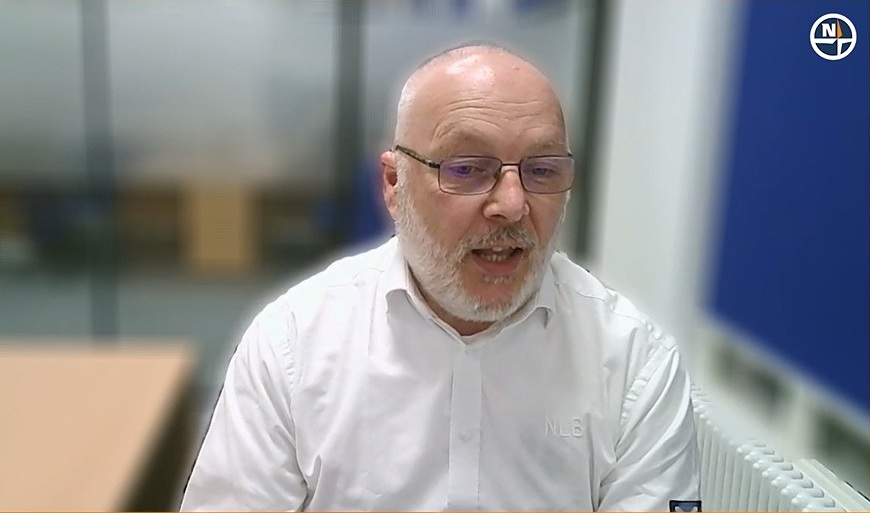
From Royal Fleet Auxiliary cadet to director of operations at the Northern Lighthouse Board, Captain Phil Day shares his insights on preparing seafarers for a sustainable maritime future
As the maritime industry accelerates towards decarbonisation, the question of how to properly prepare seafarers for new fuels and technologies has never been more urgent. Captain Phil Day, a master mariner with over 20 years of seagoing experience and current director of operations for the Northern Lighthouse Board, offers a frank assessment of the challenges ahead.
‘Knowing what the right choice of fuel is, where it’s going to come from, and whether it’s going to be available – these are still the main unanswered questions,’ Capt Day explains. ‘Anyone buying a vessel and preparing for a particular fuel is having to gamble on what the right solution is. That's a real challenge.’
The financial stakes are enormous. Investing in new vessels represents millions of pounds, creating a chicken-and-egg situation where operators hesitate to commit without certainty about fuel infrastructure, whilst fuel suppliers await clear demand signals from shipowners and operators.
Training for tomorrow's fleet
For seafarers entering the industry today, Capt Day sees reasons for cautious optimism. ‘The syllabus is changing, and those coming through cadetships now will probably be given appropriate training or awareness of alternative fuels, electrical systems, and battery propulsion,’ he notes.
However, the bigger challenge lies with existing seafarers. ‘The problem, as it has always been, is how to transition those already at sea into new technologies. Shipowners will have to provide training for their ships and the fuels they choose. It’s the only way they're going to have their ships run safely.’
Capt Day anticipates that much of this training will come from manufacturers. ‘If you’re working on a methanol system, the likelihood is other manufacturers won’t be dissimilar,’ he suggests. ‘The real difficulty comes when you're transitioning from one kind of propulsion system to another.’
The risk of fragmentation
The shift towards diverse fuel types and propulsion systems raises concerns about training becoming increasingly specialised. Capt Day acknowledges that seafarers will likely be trained only on the specific systems they’re operating, potentially limiting their mobility within the industry.
‘The shipping industry has become a bit more fractured. There are so many different types of vessels now.’
For those harbouring ambitions to move between sectors – from container ships to tankers, for instance – Capt Day’s advice is pragmatic: ‘You're going to have to demonstrate the skills. You may need to take a step down to step up. That’s the reality if you want to make a difficult transition like that.’
The problem, as it has always been, is how to transition those already at sea into new technologies
Are you a Nautilus member with a story to share?
We're always looking for diverse voices and experiences for future podcast episodes. Email telegraph@nautilusint.org to get involved.
From rural Yorkshire to the high seas
Capt Day's own journey into maritime began in an unlikely place. Growing up in rural North Yorkshire in the mid-1980s, he was ‘about as far away from the sea as you could get with no real access to maritime information’.
At 16, armed with addresses from the school careers library, he began writing to shipping companies. But timing proved challenging. ‘It was a huge time of change for the shipping industry. A lot of companies were either folding or flagging out. UK seafarers were being laid off, and cadetships were difficult to come by.’
It took two years of persistence before Capt Day secured a cadetship with the Royal Fleet Auxiliary (RFA) at 18. ‘I was starting in the industry at the very moment that the traditional avenues were collapsing,’ he reflects. His cohort at Warsash consisted of just 15 cadets – a stark contrast to today’s numbers.
The RFA experience
The Royal Fleet Auxiliary (RFA) provided Capt Day with a unique foundation. As a Ministry of Defence-owned fleet of supply vessels supporting Royal Navy operations, the RFA occupies a distinctive space within the maritime sector – a civilian merchant navy workforce operating in defence support roles.
‘The vessels operate with all military exercises and operations around the world,’ Capt Day explains. ‘They're an active part of the UK Defence Force, operating right up to the frontline with the Royal Navy, but in a support role.’
Capt Day spent nine years with the RFA before transitioning to commercial tanker operations with BP, working on very large crude carriers and later shuttle tankers in the North Sea. ‘Although I had a dangerous cargo endorsement, adjusting to commercial tanker operations took a lot of effort,’ he admits. ‘I made sure I shadowed the chief officer during my first few trips with BP and put in extra hours to learn what was going on.’
Technology then and now
The technological evolution Capt Day has witnessed spans decades. ‘I started at sea on vessels built in the 1960s, probably designed in the 1950s,’ he says. Today, at the Northern Lighthouse Board, he oversees operations on vessels that have literally just been delivered.
The Northern Lighthouse Board, along with sister organisations Trinity House and Irish Lights, provides aids to navigation – lighthouses, buoys, radar beacons and AIS systems – fulfilling the UK’s obligations under the Safety of Life at Sea (SOLAS) convention. The organisations trace their roots back many centuries, predating modern international maritime safety regulations.
‘We’ve recently delivered a new vessel to our two-ship fleet, replacing one that’s over 20 years old, and it’s been a massive step change,’ Capt Day notes. ‘Everything’s on a processor, everything’s networked. We have an Electro-technical Officer (ETO) on board. When I was initially on ships, we were turning manual valves. Now it’s all done from a screen, like a video game at home.’
The connectivity revolution
Perhaps the most dramatic change Capt Day has witnessed concerns communication.
At the Northern Lighthouse Board, approximately 70% of bandwidth is used by crew for personal purposes, with 30% for business operations. ‘We have a terabyte service on board now,’ Capt Day says. ‘Where we go beyond that, I really don’t know.’
This connectivity brings benefits and challenges alike. ‘There’s a strong desire from seafarers for these services on board, and the organisation’s ability to keep up with that desire is difficult,’ he acknowledges.
Capt Day was recently awarded the Merchant Navy Medal for Meritorious Service and Welfare, a state-backed honour with up to 20 recipients each year. ‘I was really surprised to be nominated, never mind awarded the medal,’ he says.
Asked about maintaining safety culture in modern maritime operations, Capt Day emphasises leadership. ‘Whether it’s maritime or shore-based industry, leadership is hugely important. Masters, chief engineers, second officers – we need to lead by example. Do as I do, not necessarily just as I say.’
Advice for aspiring mariners
For those looking to enter the industry today, Capt Day’s counsel combines practical strategy with timeless values.
‘Spread your net wide and apply to many different organisations, ship operators and training companies,’ he advises regarding the initial search for opportunities.
Once in, the formula for success remains unchanged: ‘Work hard, be inquisitive, be inquiring, ask questions. Really make the most of what you’re doing, whether you’re a trainee or a junior officer. If you want to progress, you need to be all those things.’
Tags