Workers' rights in the UK have edged slightly forward, but the global picture is one of mounting pressure and decline, according to the 2026 International Trade Union Confederation (ITUC) Global Rights Index.
Positive reforms in the UK
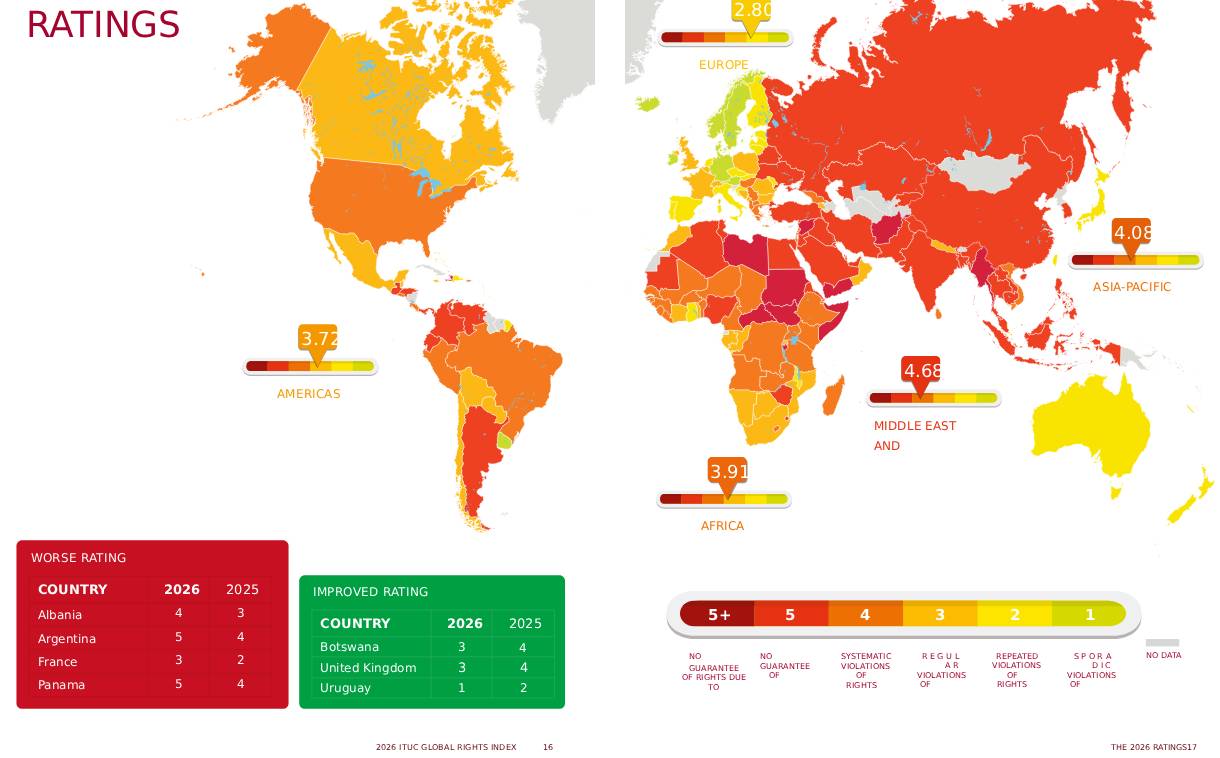
The report finds the UK has this year improved its rating from 4 to 3 after positive reforms such as the introduction of the Employment Rights Act 2025, which strengthens workers' right. This legislation, which included a number of key asks from Nautilus International including the deployment of a mandatory Seafarers' Rights Charter, has rolled back excessive restrictions on industrial action, and improved worker protections and union powers, including modernised balloting rules – changes unions have long demanded. 'These developments reflect the role of structured consultation with trade unions, demonstrating that inclusive social dialogue contributes to more worker-centred and effective labour reforms,' says the report.
In the United Kingdom, the report and its implications are being taken seriously. ITUC General Secretary Luc Triangle confirmed that ITUC representatives recently met with UK government ministers at their request to discuss the findings and ongoing labour reforms. He described the government as 'open to dialogue' and pointed to the Employment Rights Act as a positive development.
'I think it is a kind of light in a dark tunnel,' Mr Triangle said, noting that efforts to strengthen workers' protections can coexist with economic success.
Contrasting global strains on workers' rights
But this progress is in stark contrast to worsening global trends. More countries saw their ratings deteriorate than improve, continuing a long-term trend that has left six out of ten workers in environments hostile to unions. Half of all countries now restrict free speech and assembly for workers, while arrests, violence and attacks on union leaders have all risen.
At the core of this deterioration is a pattern of governments and employers undermining unions: targeting leaders, using digital surveillance to monitor organising, and pushing through labour reforms without meaningful consultation.
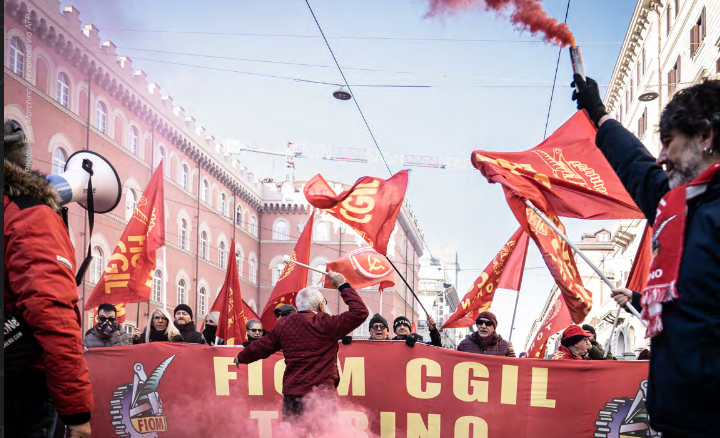
The ITUC describes this as an erosion of democratic norms that weakens collective bargaining and workers' ability to organise. Europe, often seen as a stronghold of labour rights, is also moving backwards. The region recorded its worst-ever average rating since the index began in 2014, with nearly three-quarters of countries restricting the right to strike and many undermining collective bargaining. Countries often seen as bastions of social dialogue are not immune: in the Netherlands employers have bypassed established unions to negotiate weaker deals with compliant alternatives, undermining standards for insecure workers. Across the Atlantic, the United States is now on a watchlist for possible further decline following what the Index describes as 'unprecedented and sustained' attacks on workers' rights under President Donald Trump.
Challenges facing unions
While the worst offender countries remain familiar, the key message for unions is that rights are being steadily eroded even in advanced economies. The UK's improvement shows reform is possible, but for trade unions, the challenge is clear: defend recent gains, rebuild collective power, and strengthen international solidarity in the face of a global squeeze on workers' rights.
The ratings explained
The ITUC Global Rights Index depicts the world's worst countries for workers by rating 151 countries in clusters on a scale from 1 to 5+ on the degree of respect for workers' rights, with 1 being the best rating and 5+ the worst rating a country could get. The level of economic development, size or location of the country is not taken into account on the basis that fundamental rights are taken to be universal. The ratings are judged against various indicators such as ILO Conventions.
Read the full report here.
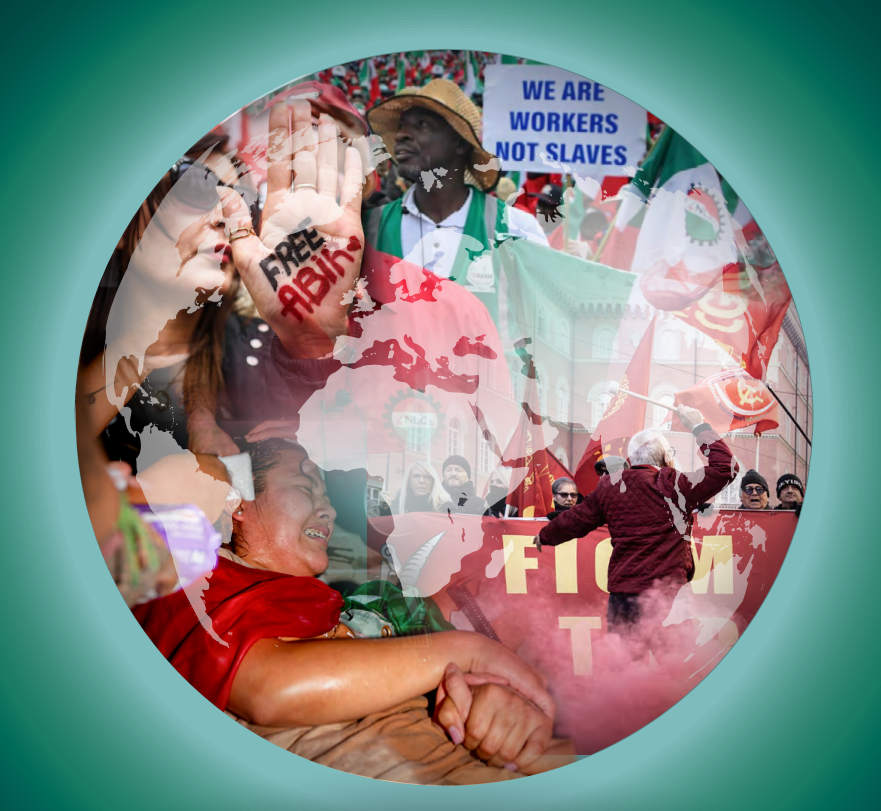
What is the Global Rights Index
International Trade Union Confederation (ITUC) general secretary Luc Triangle described the Index as an annual assessment of labour conditions worldwide, covering 151 countries and based on 97 indicators. 'We analyse what is happening with workers' rights, including the right to organise, collective bargaining, and freedom of expression,' he said. Now in its 12th edition since its launch in 2014, the report serves as a key benchmark for trade unions globally.
The report is particularly significant for unions as it demonstrates the close link between labour rights and democratic freedoms. 'When democracy is under attack, workers' rights are among the first to come under pressure,' Mr Triangle explained. He noted that the erosion of these rights is no longer confined to specific regions but is now a 'global trend', including within parts of Europe.
Despite the concerning findings, Mr Triangle emphasised that the report also plays a practical role in supporting trade union campaigns. It provides evidence to strengthen advocacy, inform policy discussions, and mobilise workers. 'Our strength is in our membership,' he said, urging unions to continue organising and defending established protections.
Tags
More articles
I'm here for you — and I mean that
Nautilus welcomes landmark international ruling that affirms right to strike
Nautilus International has welcomed a landmark ruling by the International Court of Justice (ICJ) confirming that the right to strike is protected under international law.
Nautilus shapes debate on seafarers' rights in new European report
Nautilus International has played a central role in highlighting the growing gap between maritime and land-based labour protections, following the launch of a major European report examining working conditions at sea.