Cost-cutting and poor governance have left Europe's transport system – including the maritime sector – unprepared for emergencies such as the Iran conflict, says the European Transport Workers’ Federation (ETF).
In a 2 April open letter to European Commission president Ursula van der Leyen, the ETF points out that seafarers operating in affected regions are facing escalating dangers, including longer routes, extended time at sea, and heightened exposure to security threats. More than 20,000 seafarers, many of whom are either EU nationals or onboard EU-owned ships, are stranded due to the ongoing conflict.
‘Yet the European response remains disjointed and insufficient,’ contends the ETF. ‘The absence of coordinated European safety corridors, reliable emergency repatriation mechanisms, and clear, enforceable protection standards represents a structural failure.’
The open letter continues: ‘Once again, Europe’s transport system is structurally unprepared. … This is the result of years of deliberate political choices that have triggered intra-EU competition based on cost-cutting, which exposed – rather than protected – European players to unfair international competition, which led to fragmented governance, and created dependence on third countries for passenger connectivity and freight services, instead of prioritising resilience, public investment, and quality jobs.’
The ETF has called on the European Commission to act immediately on three non-negotiable priorities:
- adopting binding, cross-sector crisis and safety frameworks for all transport sectors that include a strong worker dimension
- guaranteeing that crises are not managed through downward pressure on jobs, wages, and working conditions
- in consultation with social partners, come up with robust transport preparedness strategies that guarantee all necessary ingredients for resilient EU transport systems
To kick off this process, the Commission has been asked to convene a high-level roundtable to deliver a structural resilience strategy focused on long-term systemic change.
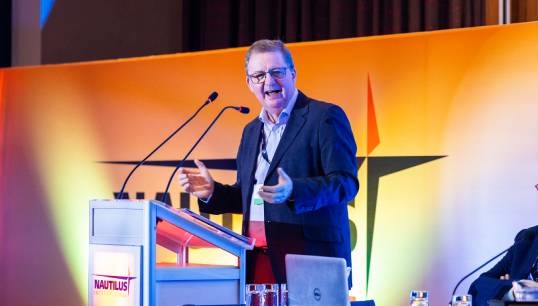
As an affiliate union of the ETF, Nautilus International supports the Federation’s demands. General secretary Mark Dickinson commented: ‘This effort is very much in line with our own work campaigning for nation states to improve their economic and defensive resilience by investing in their Merchant Navies and adopting cabotage laws.’
Nautilus has recently produced two policy reports on these topics which can be downloaded free of charge from the Resources section of the Union’s website:
Tags
More articles
Flag state failures putting seafarers at risk in Persian Gulf: Union renews calls for safe passage
Message from Nautilus general secretary Mark Dickinson on the escalating US-Israeli war against Iran and the effective closure of the Strait of Hormuz.
Nautilus requests MIN reassessment to ensure timely repatriation
Nautilus International has expressed its concerns to the Maritime and Coastguard Agency after the release of Marine Information Note (MIN) 732 on 12 March
Nautilus pressure wins Middle East hazard pay from Dutch shipowners
Merchant seafarers stuck on Dutch vessels in the Middle East will now receive hazard pay equal to double their salaries, thanks to Nautilus International.