Nautilus welcomes UK government plans for new cross-Channel seafarer protections
5 June 2026
Nautilus International has welcomed UK government proposals to extend pay and working condition protections for seafarers on cross-Channel routes, calling the consultation a ‘meaningful step forward’ for maritime workers.
The measures, announced on 5 June, would guarantee minimum wage-equivalent pay and enforce minimum rest periods for seafarers working on frequent crossings between the UK, France and the Channel Islands and other legal protections. Crucially, they would extend protections beyond UK territorial waters for the first time.
Nautilus said the proposal to extend national minimum wage equivalent protections beyond UK territorial waters on cross-Channel services is a development that closes a long-standing loophole that operators have been able to exploit at the expense of some of the most exposed workers in the maritime sector.
It also highlighted the importance of alignment with French legislation, particularly the proposed 14-day maximum service period, noting that some crews on the Dover-Calais route have previously been deployed for up to 17 weeks.
The proposal to extend national minimum wage equivalent protections beyond UK territorial waters on cross-Channel services is a development that closes a long-standing loophole that operators have been able to exploit at the expense of some of the most exposed workers in the maritime sector.
‘The proposed mirroring of the French legislation on both wage requirements and maximum periods of service aboard signals a genuine willingness to use bilateral agreements as the building blocks for broader international standards. The 14-day maximum service period proposal is especially welcome as we have seen some operators on the Dover-Calais route deploy seafarers for periods of up to 17 weeks, and Nautilus has consistently argued that this is incompatible with safe operations across one of the world’s busiest shipping lanes,’ said Nautilus.
Measures being consulted on include:
- Seafarers being paid the equivalent of at least the National Minimum Wage throughout journeys between the UK and France and Channel Islands
- Setting maximum periods of work at sea and minimum periods of rest
- These measures build on existing legislation covering UK waters and form part of the government's commitment to improve the working conditions of seafarers.
The Union described the UK-France approach as a potential template for wider reform and ‘fair work at sea’, arguing that enforceable protections ‘must follow the route, not stop at the territorial limit’. It welcomed the government’s ambition to pursue similar agreements with other neighbouring countries.
However, Nautilus urged ministers to move more quickly to extend protections across additional international routes, warning that reliance on future bilateral deals risks leaving some seafarers in a ‘continuing grey zone’.
The government said the consultation builds on earlier reforms, including the extension of national minimum wage equivalence in UK waters and efforts to tackle poor employment practices in the ferry sector.
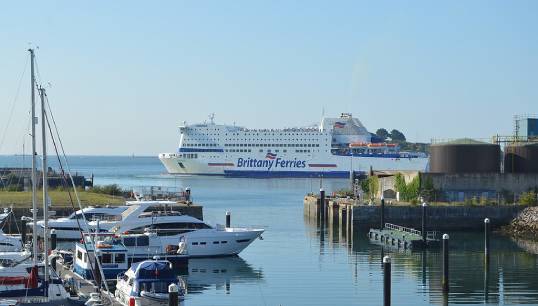
The announcement also confirmed which operators have met the requirements of the UK mandatory Seafarers' Charter, incorporated into the new Employment Rights Act, which sets out higher standards for seafarer welfare, working conditions and pay beyond existing legal requirements, including on social welfare provision, fairer contracts, quality training and professional development. DFDS, Brittany Ferries and Stena Line have all successfully achieved Seafarers’ Charter Status on their services between the UK and France and the Channel Islands.
Nautilus confirmed it will engage fully in the consultation ahead of the 17 July deadline, pushing for strong regulations on UK-France routes and a clear timetable for expanding protections more widely.
Tags
More articles
Nautilus welcomes landmark international ruling that affirms right to strike
Nautilus International has welcomed a landmark ruling by the International Court of Justice (ICJ) confirming that the right to strike is protected under international law.
Nautilus shapes debate on seafarers' rights in new European report
Nautilus International has played a central role in highlighting the growing gap between maritime and land-based labour protections, following the launch of a major European report examining working conditions at sea.